
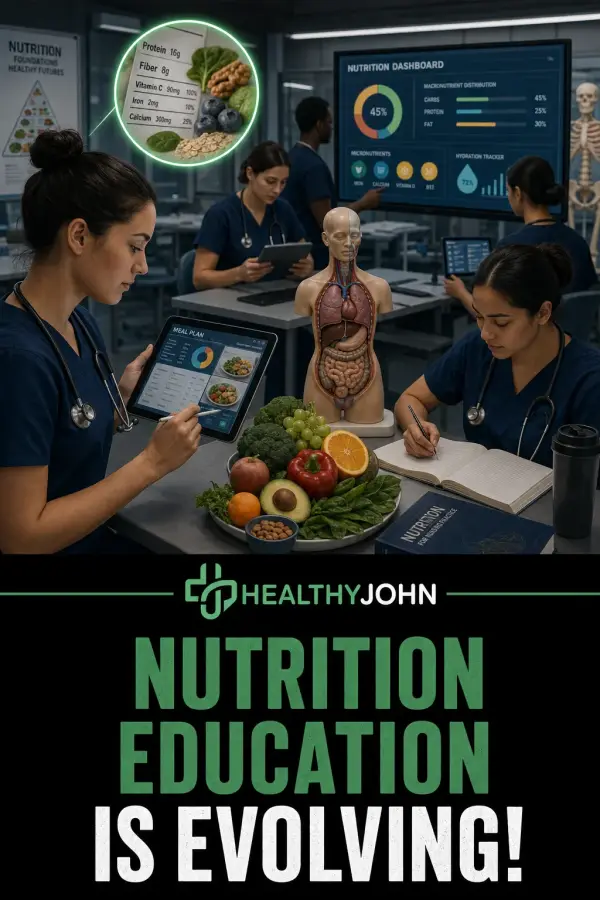
If you’ve ever left a doctor’s office with advice about food that felt too vague to use, you already know the problem: most people don’t need a lecture on nutrition. They need clear, realistic help that fits a busy life, a tight budget, and a real diagnosis. That’s why the recent attention on nutrition education in nursing schools is worth a closer look, even if the headline talk about a “huge leap forward” goes a bit too far.
The basic idea makes sense. Nurses are often the people patients see most. If they have a stronger grasp of nutrition, they may be better prepared to answer common questions, spot risk earlier, and give advice that actually works in day-to-day life. But there’s an important catch: nutrition education is not magic on its own. The best results usually come when it’s tied to practical care, behavior support, and the food environment around the patient.
What the nutrition education push is really about
The source notes point to a Texas A&M study and a wider shift in how future nurses are taught. The exact details of that study matter, but the bigger picture is easier to see. Health training programs are paying more attention to nutrition because diet affects many common health issues, from blood pressure to blood sugar to weight management.
That doesn’t mean every nurse is expected to become a dietitian. It means nursing students benefit when they learn the basics well enough to connect food with patient care. In practice, that could include knowing how to talk about sodium, fiber, protein, hydration, meal timing, and label reading without sounding preachy or confusing.
It also means understanding limits. A nurse can reinforce healthy habits, but they should not be expected to replace a registered dietitian for complex nutrition needs, eating disorders, kidney disease diets, or medical nutrition therapy. Good training should help nurses know when to give simple guidance and when to refer.
Why nutrition education keeps coming up in health care
There’s a simple reason this topic won’t go away: many people eat in ways that make chronic disease harder to prevent or manage. The CDC says healthy eating patterns are linked with lower risk of heart disease, type 2 diabetes, and obesity. It also points out that more than 70% of the sodium Americans consume comes from packaged and prepared foods, which means “just use less salt at home” doesn’t solve the whole problem.
That’s where nurses can help in a real-world way. A short, clear conversation during a visit may be more useful than a long list of rules. For example:
- A patient with high blood pressure may need help spotting sodium-heavy foods in the store, not just advice to “eat better.”
- A parent trying to feed kids on a budget may need meal ideas that use frozen vegetables, beans, eggs, or plain yogurt.
- A teen athlete may need to know how to eat enough to support training, not only how to cut sugar.
This is also why nutrition education in schools and health programs tends to work better when it’s practical. The strongest recent evidence is mostly in school-based and adolescent settings, and it suggests that nutrition lessons are more useful when they’re paired with behavior support, meals, gardens, or other hands-on changes. Lectures alone usually don’t move the needle very far.
What recent studies suggest, without overstating them
The newer studies in the brief do not prove a nationwide transformation. They do suggest steady progress in how nutrition is taught and applied.
A 2023/2024 systematic review of controlled school-based trials found evidence that nutrition education interventions can change food consumption, but the authors also warned that results depend on the behavior model and setting. In plain language, teaching can help, but how you teach matters a lot.
A 2024 pilot study in Health Services Insights looked at a nutrition intervention for adolescents based on social cognitive theory. Another 2024 cluster randomized trial in Tanzania combined meals, education, and gardens. A separate 2024 study in Public Health Nutrition examined the factors that shaped fruit and vegetable intake in a school intervention. These are not nursing studies, but they support a useful point: nutrition education works best when it is specific, social, and practical.
That matters for nursing too. If future nurses are trained to give advice that matches real life, they may be more effective than a provider who can recite nutrition facts but can’t translate them into a plan a patient can follow.
What good nutrition education for nurses should look like
If nursing schools want nutrition education to be more than a box to check, the training should go beyond memorizing food groups. It should teach students how to use nutrition in actual patient care.
1. Simple, usable food guidance
The CDC’s current healthy eating guidance emphasizes fruits, vegetables, protein, dairy without added sugars, healthy fats, and whole grains. Harvard Health’s Healthy Eating Plate offers a similar pattern, with a bit more detail about fiber-rich foods, whole grains, unsaturated fats, omega-3s, and going easy on processed foods.
For nurses, that means being able to explain the basics in everyday language. Not “follow an optimal dietary pattern,” but “try to build most meals around vegetables, a protein source, and a whole grain when you can.”
2. Label reading and meal planning
Readers often say label reading is one of the hardest parts of eating better. That’s believable. Nutrition facts panels can be confusing, and many people don’t know where to start. Nursing students can be taught to help patients compare foods in a simple way:
- Look at sodium first if blood pressure is a concern.
- Check added sugars in drinks and flavored yogurt.
- Choose fiber-rich grains when possible.
- Watch serving size, because it changes the numbers fast.
This kind of coaching is small, but it can stick.
3. Conversation skills, not just facts
A patient is more likely to hear advice if it feels respectful and realistic. Nurses need practice asking questions like:
- “What does a usual day of eating look like for you?”
- “What’s hardest about changing meals right now?”
- “Do you cook much, or do you need quick options?”
Those questions open the door to advice that fits the person, instead of handing out the same handout to everyone.
4. Knowing when nutrition advice needs a referral
This part matters a lot. If a patient has kidney disease, diabetes, gastrointestinal problems, pregnancy-related needs, disordered eating, or major weight changes, they may need more specialized care than a general nutrition chat can provide. Nurses should know when to bring in a registered dietitian or another qualified professional.
Why this matters for patients, not just students
It’s easy to think of nutrition education as a school issue. It isn’t. It affects the kind of help people get after they leave the clinic, hospital, or urgent care.
Imagine two patients with similar concerns. One is told, “Eat healthier.” The other hears, “Try swapping sugary drinks for water, add a vegetable to dinner most nights, and choose lower-sodium foods when you can.” The second patient has something to work with. That doesn’t guarantee success, but it gives a starting point.
Patients also tend to trust nurses. That trust can be useful, but only if the advice is grounded and honest. Overpromising is the wrong move. Telling someone food will fix every problem is not only unhelpful, it can shut down the conversation when the person can’t follow through.
Good nutrition education gives nurses a better chance to meet patients where they are. That includes people who are busy, stressed, low on money, or trying to manage a family schedule. It also includes teens who are trying to sort good advice from social media noise.
The hard part: nutrition education alone is usually not enough
This is the piece that headlines often miss. Teaching people about nutrition does not automatically change what they eat. The CDC notes that U.S. students receive less than 8 hours of required nutrition education per school year, far below the 40 to 50 hours it says are needed to change behavior. That tells us two things at once: current exposure is often too low, and more class time alone is not the full answer.
Why not? Because eating is shaped by more than knowledge. Cost, taste, culture, time, access, habits, and family routines all matter. A nurse can know the right advice and still face a patient who can’t afford fresh food every week or doesn’t have time to cook from scratch.
That’s why the most useful nutrition education is practical and humble. It works with the reality that many people rely on packaged and prepared foods, and it focuses on small changes that are actually repeatable.
What readers can do with this right now
You don’t have to wait for a nursing curriculum change to use the idea behind it. The same practical approach can help at home.
- Build one better meal at a time. Add fruit to breakfast, vegetables to lunch, or beans to dinner.
- Check sodium on the foods you buy most. Bread, canned soup, frozen meals, sauces, and snacks can add up quickly.
- Keep a few backup foods on hand. Frozen vegetables, canned beans, tuna, eggs, plain oats, and brown rice can make fast meals easier.
- Ask for specifics at appointments. Instead of “What should I eat?”, try “What’s one change I can actually keep this month?”
If you’re a parent, teacher, nursing student, or patient, hands-on lessons usually help more than abstract talk. A sample meal, a quick label demo, or a grocery cart example will often teach more than a worksheet ever will.
Where the real progress is likely to happen
The most honest reading of the evidence is this: nutrition education is improving, but the biggest gains come when it’s tied to real life. That means better training for nurses, yes. It also means better food environments, more practical school lessons, and more support for people trying to act on advice they already know.
So the headline is not really “nutrition education has changed everything.” It’s more grounded than that. The better story is that health care is starting to treat nutrition as part of normal care, not a side note. That’s a good shift, even if it’s uneven and incomplete.
If you want a useful next step, look at one meal you eat often and make it a little easier to build well. Then, if you’re a nursing student or health professional, ask whether your nutrition training teaches you how to talk to real people in real settings, not just pass an exam.



Comments
Be the first to share your thoughts on this article.