
When anxiety shows up in your stomach, what should you eat?
If your anxiety tends to hit as a tight stomach, nausea, bloating, or that uneasy “something’s off” feeling in your gut, food can feel confusing fast. You might skip meals because you’re not hungry, reach for quick carbs because they feel soothing, or notice that coffee and greasy takeout make you feel worse. That’s where the gut-brain connection matters. Your digestive system and your nervous system are in constant communication, and the foods you choose can influence both sides of that conversation.
This doesn’t mean a single meal can fix anxiety. It also doesn’t mean every stomach symptom is “just stress.” But it does mean your daily food pattern can either keep your system steady or make it harder to settle. The goal is simple: choose foods that support digestion, keep blood sugar from swinging wildly, and give your gut bacteria something useful to work with.
How the gut and brain keep talking
Your gut and brain stay connected through nerves, hormones, immune signals, and the microbes living in your digestive tract. When you’re stressed, your body may shift how it digests food, how often your bowels move, and how sensitive your gut feels. At the same time, what you eat can change how comfortable your stomach feels and how stable your energy and mood are later in the day.
That’s why the best foods for anxiety often aren’t “calming” in a dramatic sense. They’re steady foods. They help you feel less jittery, less crash-prone, and less likely to get stuck in the loop of hungry, anxious, and irritated all at once.
What tends to help most
- Fiber-rich plant foods that feed beneficial gut bacteria
- Fermented foods that may support a healthier microbial balance
- Protein and healthy fats that slow digestion and steady energy
- Magnesium- and omega-3-rich foods that fit easily into regular meals
- Hydrating foods and fluids that support digestion and reduce the “off” feeling that comes with dehydration
Foods that support the gut-brain axis
You do not need a special diet. Start with foods that are easy to eat regularly, easy to digest for you, and realistic in your routine. The point is consistency, not perfection.
1. Oats, barley, and other gentle whole grains
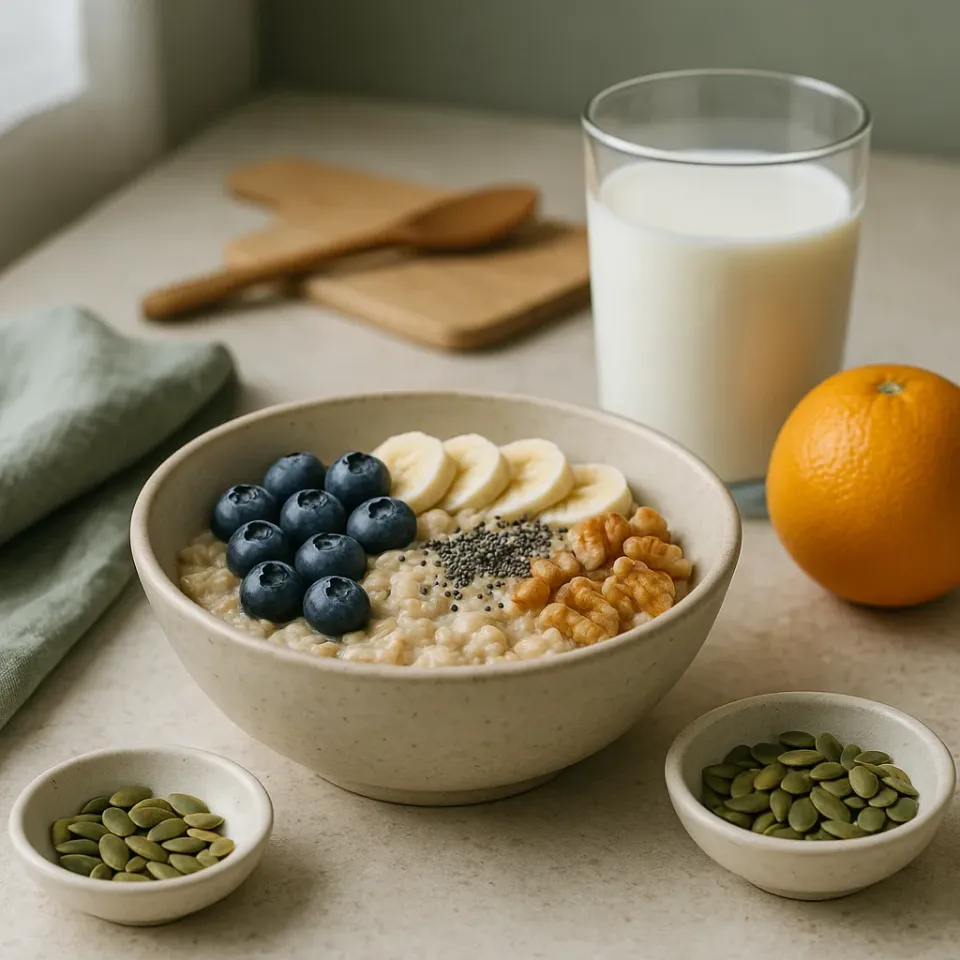
Whole grains like oats and barley contain soluble fiber, which helps feed gut bacteria and can make meals more filling. A steadier breakfast can matter a lot if mornings are when anxiety tends to spike. Oatmeal with nuts and berries is a good example because it combines fiber, fat, and protein in one bowl.
If you’re sensitive to large servings of fiber, start small. A sudden jump from low fiber to a very high-fiber diet can cause gas and bloating, which may make anxiety feel worse before it gets better.
2. Yogurt, kefir, and other fermented foods
Fermented foods like yogurt and kefir provide live cultures, and they’re often easier to include than more complicated gut-health strategies. A plain yogurt with fruit and seeds can work as breakfast or a snack. If dairy bothers you, look for lactose-free versions or other fermented options that suit your body better.
Fermented foods aren’t magic, and not every product is a fit. Some are high in added sugar, which can lead to an energy spike and crash. Check the ingredient list and aim for simpler versions when you can.
3. Beans, lentils, and chickpeas
Legumes are a strong source of fiber and plant protein, and they can help keep blood sugar steady through the day. That steadiness matters because hunger and blood sugar swings can feel a lot like anxiety, especially if you’re already tense.
If beans usually leave you gassy, don’t write them off. Try smaller portions, rinse canned beans well, or start with lentil soup. Many people tolerate lentils better than larger beans at first.
4. Berries, leafy greens, and colorful vegetables
These foods bring antioxidants, fiber, and water to the plate. Think spinach in eggs, berries with breakfast, roasted carrots at dinner, or a side salad with lunch. The more colors you rotate through, the more likely you are to get a wider mix of plant compounds that support overall gut health.
There’s also a practical benefit: produce adds volume without being heavy. For people whose anxiety is tied to a nervous, unsettled stomach, lighter meals can feel easier than rich, dense ones.
5. Nuts, seeds, and nut butters
Almonds, walnuts, pumpkin seeds, chia seeds, and flaxseed are convenient sources of healthy fats, fiber, and minerals. A small handful can bridge the gap between meals so you don’t arrive at dinner shaky and irritable.
Pumpkin seeds and almonds are often popular choices because they’re easy to carry. If you have a history of nut allergies, skip them and use seeds or other tolerated options instead.
6. Fatty fish
Salmon, sardines, trout, and similar fish supply omega-3 fats, which play a role in brain health. You don’t need fish every day. Even one or two meals a week can give your menu some structure. A salmon rice bowl with greens and avocado is a simple example that hits protein, healthy fat, and fiber in one meal.
If fish isn’t your thing, you can still build a solid pattern with other protein sources and omega-3-rich plant foods like flax and chia.
7. Bananas, citrus, and other easy snacks
When anxiety lowers your appetite, you may need foods that are easy to grab and easy on the stomach. Bananas, oranges, applesauce, and crackers with nut butter can be useful between meals. These aren’t “perfect” foods, but they can keep you from getting overly hungry, which often makes anxiety louder.
That point is worth repeating: an anxious body is often a underfed body, a dehydrated body, or both.
What to limit if your anxiety feels worse after eating
Some foods and habits can aggravate both the gut and the nervous system. The goal isn’t to ban them forever. It’s to notice patterns and make swaps where it counts.
- Caffeine: Coffee, energy drinks, and even some teas can increase jitters, speed up the gut, or disrupt sleep.
- Alcohol: It may feel relaxing at first, but it can disrupt sleep and irritate the gut later.
- Highly processed, low-fiber snacks: These can leave you hungry again quickly.
- Large, very greasy meals: They can feel heavy and intensify nausea or reflux for some people.
- Very sugary foods on an empty stomach: They can trigger a quick rise and fall in energy that feels a lot like anxiety.
Notice how individual this can be. Some people tolerate a morning coffee fine if they’ve eaten first. Others feel shaky after half a cup. Your best guide is your own pattern, not someone else’s rules.
Simple meal patterns that support calmer days
Rather than thinking in terms of one “best” food, build meals that combine protein, fiber, and fat. That’s the part that usually keeps people steady.
Breakfast ideas
- Oatmeal topped with walnuts, berries, and chia seeds
- Greek yogurt with sliced banana and pumpkin seeds
- Eggs with spinach and whole-grain toast
Lunch ideas
- Lentil soup with a side salad
- Turkey or hummus wrap with vegetables
- Rice bowl with salmon, cucumber, and avocado
Dinner ideas
- Chicken, roasted vegetables, and quinoa
- Chickpea curry with brown rice
- Tofu stir-fry with mixed vegetables and noodles
Snack ideas
- Apple slices with peanut butter
- Plain yogurt with fruit
- Trail mix with seeds and nuts
- Crackers with hummus
How to eat when anxiety kills your appetite
This is a common problem, and it can spiral quickly. The more anxious you feel, the less you eat. The less you eat, the more your body feels off. If that sounds familiar, keep the plan small.
- Start with one easy item. Half a banana, a few crackers, or a small yogurt is enough to begin.
- Set a low-pressure eating rhythm. Try to eat something every 3 to 4 hours, even if it’s small.
- Use liquids if solids feel hard. Smoothies, soups, and kefir can be easier on anxious days.
- Keep “safe foods” on hand. These are foods you usually tolerate well, not foods that are perfect on paper.
- Pair food with water. Dehydration can make anxiety and constipation both feel worse.
If you notice that food fear, skipped meals, or stomach pain are becoming a pattern, it’s worth talking with a clinician or dietitian. There may be a digestion issue, a medication side effect, or an eating pattern that needs support.
Tradeoffs to keep in mind
The gut-brain connection is real, but it’s easy to oversimplify. A few practical caveats can save you frustration.
- More fiber is not always better right away. Increase slowly.
- Fermented foods don’t suit everyone. Some people with reflux or sensitivity feel worse with them.
- Healthy foods can still be a problem in large portions. Even oats and beans can be too much if you jump in too fast.
- Anxiety can have many causes. Food is one part of the picture, not the whole thing.
It’s also possible to get stuck searching for the “right” food and lose sight of the bigger win: regular, tolerable meals that help your body feel safer. That’s usually more useful than chasing a perfect list.
A practical 3-day reset for your routine
If you want to test whether gut-friendly eating changes how anxious you feel, try a short, simple experiment. Keep the rest of your life as normal as possible and focus on consistency.
- Day 1: Eat breakfast within an hour or two of waking. Include protein plus fiber.
- Day 2: Add one fermented food or one extra fiber-rich plant food.
- Day 3: Swap one caffeinated or sugary snack for a steadier option like yogurt, fruit, or nuts.
Notice what changes in your energy, stomach comfort, irritability, and ability to concentrate. You’re looking for patterns, not perfection.
When food isn’t enough on its own
If anxiety is frequent, intense, or affecting sleep, work, relationships, or appetite, food can support you but it shouldn’t be the only support. Ongoing anxiety can deserve medical and mental health care, and digestive symptoms sometimes need their own evaluation too. If you’re dealing with weight loss, severe nausea, blood in stool, persistent vomiting, or pain that keeps coming back, get medical advice.
For many people, the most useful approach is a both-and strategy: regular meals that are easier on the gut, plus whatever other care is right for the anxiety itself.
Next step: Pick one breakfast and one snack from this article and use them for the next three days. Keep notes on your stomach comfort, energy, and anxiety before and after eating so you can see what actually helps.




Comments
Be the first to share your thoughts on this article.