
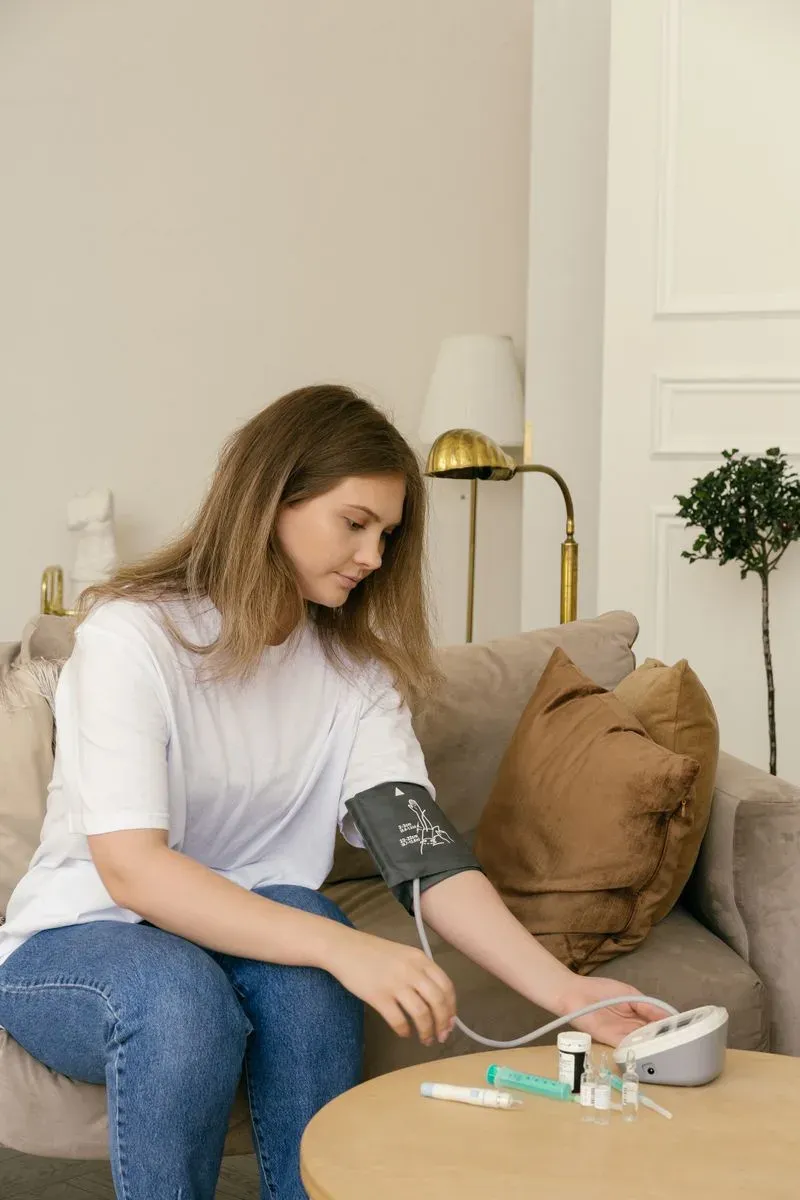
- A routine ECG may one day help flag cirrhosis earlier, but it cannot diagnose liver disease on its own.
- Cirrhosis is often missed because early symptoms can be vague or absent.
- The best next step is to ask about proper liver screening if you have risk factors such as alcohol use, hepatitis, diabetes, or fatty liver disease.
- New detection tools still need validation in larger, more diverse groups before they become routine care.
Most people think of an electrocardiogram, or ECG, as a heart test. That makes sense. It checks the heart's electrical activity. But one recent Mayo Clinic research post points to a stranger idea, a routine ECG may also provide clues that could help flag cirrhosis earlier, before obvious symptoms show up.
That does not mean an ECG can diagnose liver disease on its own. It does mean a test many people already get in regular care might raise an early clue that something deeper is going on. For people with liver risk factors, that could matter a lot.
Short version: a common heart test may one day help spot hidden liver scarring sooner, which could mean earlier treatment and fewer surprises.
What this idea means in plain language
Cirrhosis is severe scarring of the liver. It can come from long-term alcohol use, hepatitis B or C, fatty liver disease, and other causes. In the early stages, people may feel fine. That is part of the problem. By the time symptoms show up, the liver may already be badly damaged.
The Mayo Clinic research post describes ongoing work looking at whether a standard ECG could help detect serious liver disease earlier. The appeal is easy to see. ECGs are cheap, quick, and already used in many clinics. If a routine test can sometimes hint at liver trouble before a person feels sick, doctors may have another possible signal to follow up on.
There is a catch, though. An ECG is not a liver scan. It does not see scarring the way an ultrasound, elastography, or biopsy might. Think of it more like a clue than a verdict.
Why this matters more than it sounds
Health discovery often sounds exciting only when it leads to a new drug or a fancy machine. But sometimes the real win is simpler. A test people already use may become a better early warning tool.
That matters for two reasons:
- Earlier detection can change care. If cirrhosis is found sooner, doctors can look for the cause, slow further damage, and watch for complications, depending on the cause, stage, and whether fibrosis is still reversible.
- Access is a big deal. Low-cost, point-of-care tools can improve early detection when paired with smart analysis, according to some recent reviews of wearable diagnostics. The same idea shows up here, although ECG-based liver screening remains unproven, and it is not yet clear whether it would reach people who would not otherwise get liver testing right away.
There is also a wider health systems lesson. WHO guidance on monitoring social determinants of health equity says factors like where people are born, grow, live, work, and age shape health gaps. That matters because liver disease is not found in a vacuum. Some people get tested late because of cost, location, stigma, or poor access to care. You can read WHO's monitoring guidance here: WHO guidance on monitoring social determinants of health equity.
In plain terms, a simple test only helps if the right people can get it and follow up on it.
How an ECG could help, even though it's not a liver test
An ECG records the timing and pattern of the heart's electrical signals. That sounds far removed from the liver, but the body does not keep clean little boxes for each organ. Serious liver disease can affect fluid balance, blood chemistry, and the heart's rhythm or conduction in ways that may sometimes show up on an ECG, although these changes are nonspecific.
That is likely why researchers are looking at it as a possible clue. The Mayo Clinic research post describes preliminary work suggesting that a simple ECG may help detect cirrhosis earlier, before symptoms appear. That is still research, not a finished rule for routine practice or screening. But it fits a larger trend in health discovery, finding useful signals in tools people already have.
What this does not mean:
- It does not mean every odd ECG means liver disease.
- It does not mean a normal ECG rules liver disease out.
- It does not replace blood tests, imaging, or a doctor's exam.
One way to think about it is this, an ECG could become a smoke alarm, not the fire report. If it goes off, you still need to find the source.
Why cirrhosis is often missed until late
Many people with early liver scarring do not feel sick. They may have mild tiredness, a bit of belly swelling, or nothing clear at all. Those signs are easy to ignore or blame on stress, food, age, or poor sleep.
That is why the idea of earlier detection matters. A person can seem fine while the liver is quietly struggling.
Here are a few reasons cirrhosis can slip by:
- Symptoms can be vague.
- Some people may have under-recognized risk factors, even if they are not obvious in the chart or problem list.
- Routine care may focus on blood pressure, cholesterol, or blood sugar first.
- Follow-up testing may be delayed if the first clue is dismissed.
Worth noting, WHO patient safety guidance says progress is being tracked across member states against strategic objectives for safer care systems. That is a reminder that early detection is only one piece. Safe care also depends on whether warning signs are taken seriously and acted on in time.
What would make this useful in real life?
For a test like this to help, it would need to do three things well:
- Pick up people who are truly at risk. A test that fires on everyone is not very helpful.
- Avoid too many false alarms. If too many people are told something might be wrong when it isn't, that can lead to worry and extra testing.
- Lead to a clear next step. A warning only helps if there is a plan, blood work, imaging, or a referral when needed.
This is where the early-stage nature of the research matters. New detection tools still need validation in larger, more diverse groups before they are used broadly. The same caution applies to ECG-based liver clues, even if the field includes validation studies and at least one pragmatic trial in a research setting.
So yes, the idea is interesting. No, it is not ready to replace standard liver checks.
How to start if you think liver disease could be a concern
If this topic caught your eye because you have a liver risk factor, start simple. You do not need to ask for an ECG as a liver test. Instead, bring up the bigger issue, whether you should be screened for liver disease at all.
Good reasons to ask include:
- Long-term heavy alcohol use
- Hepatitis B or C
- Known fatty liver disease
- Diabetes, excess body weight, or metabolic syndrome
- A family history of liver disease
You can say something like, "I read that some routine tests may help find liver disease earlier. Do I need liver blood tests or any follow-up based on my risk factors?"
A normal ECG should not reassure you if your liver risk is high. If you have the risk factors above, ask about tests that actually look at the liver, such as liver enzymes, hepatitis screening, or imaging when appropriate. Liver enzymes alone do not rule out fibrosis, and elastography is often more informative when available.
If you are already getting an ECG for another reason, such as chest pain, palpitations, or a pre-op check, that may be a good time for your clinician to notice something unusual. But the ECG is still just one piece of the picture.
What to avoid
New discovery stories can be tempting. They sound simple. They sound hopeful. Still, there are a few traps to skip.
- Don't treat an ECG as a liver screening test on your own. The research is not there yet.
- Don't ignore liver risk factors because you feel okay. Early cirrhosis often has few clear signs.
- Don't chase one unusual result without context. A single test rarely tells the whole story.
- Don't assume newer always means better. Early-stage tools can miss people or overcall disease until they are tested in larger groups.
The best use of this discovery right now is probably not self-diagnosis. It is better awareness. If a routine ECG someday helps point doctors toward liver disease sooner, that could be a real step forward. For now, it is a clue worth watching, not a shortcut around proper liver care.
If you want one next step, make it this, look at your own liver risk factors and ask your clinician whether you need proper liver screening, not just routine heart testing.
This is a good example of how health discovery often starts with a familiar tool being used in a new way. The ECG idea is promising, but it is still early, so readers should treat it as a possible clue, not a liver test they can rely on. If you have liver risk factors, the bigger move is asking about real screening, not waiting for symptoms.




Comments
Be the first to share your thoughts on this article.