

If you’ve ever sat through a health class or a hospital visit and thought, “That’s nice, but how does this help me on a Tuesday night with a tired family and a tight budget?”, you’re asking the right question. A lot of nutrition education sounds good on paper. The hard part is making it useful in real life.
That’s why the latest work in nutrition education matters. The big change is not just more facts about protein or vitamins. The better programs are getting more practical. They connect food advice to daily decisions, like what to pack, what to buy, how to read a label, and how to make a meal when time is short.
Recent research, especially in schools and with teens, suggests that nutrition education can help. But it works best when it is more than a lecture. It seems to do more when it’s paired with hands-on support, meals, gardens, cooking, or behavior change tools. That’s an important detail, because it changes what “good nutrition education” should look like for students, families, and even future nurses.
Why nutrition education keeps coming up now
There’s a simple reason this topic gets attention: most people know food matters, but knowing the basics is not the same as having the skills to use them.
The CDC says U.S. students get less than 8 hours of required nutrition education per school year, while it says 40 to 50 hours are needed to change behavior. That gap does not prove every school lesson is useless. It does suggest many students are not getting enough time or practice for the lessons to stick.
At the same time, the advice itself is not mysterious. The CDC’s healthy eating guidance points to fruits, vegetables, protein, dairy without added sugars, healthy fats, and whole grains. Harvard Health gives a similar picture: more fiber, whole grains, fruits and vegetables, unsaturated fats, and omega-3s, with fewer processed foods. The big challenge is not finding the advice. It’s making it livable.
What the newer studies suggest about nutrition education
The most recent evidence is strongest in school settings, especially for adolescents. A 2023/2024 systematic review of controlled school-based trials found that nutrition education interventions can change food consumption, but the results depend a lot on the behavior model and the setting. In plain English: how the lesson is built matters.
That fits with a 2024 pilot study in adolescents that used social cognitive theory, a framework that focuses on skills, support, and confidence, not just information. Another 2024 trial in Tanzania combined meals, education, and gardens. That kind of package reflects what many parents and teachers already suspect: kids often learn better when they can taste, grow, cook, and practice food choices instead of just hearing about them.
There was also a 2024 study in young female endurance athletes that looked at nutrition education sessions and reported changes in energy availability, body composition, eating attitude, and sports nutrition knowledge. That does not mean one class fixes athletic nutrition. It does suggest that targeted education may help when the message matches the learner’s real needs.
The takeaway is not “nutrition education works” in every setting the same way. The better summary is this: nutrition education seems most helpful when it is active, specific, and tied to the situations people actually face.
What future nurses may need to learn differently
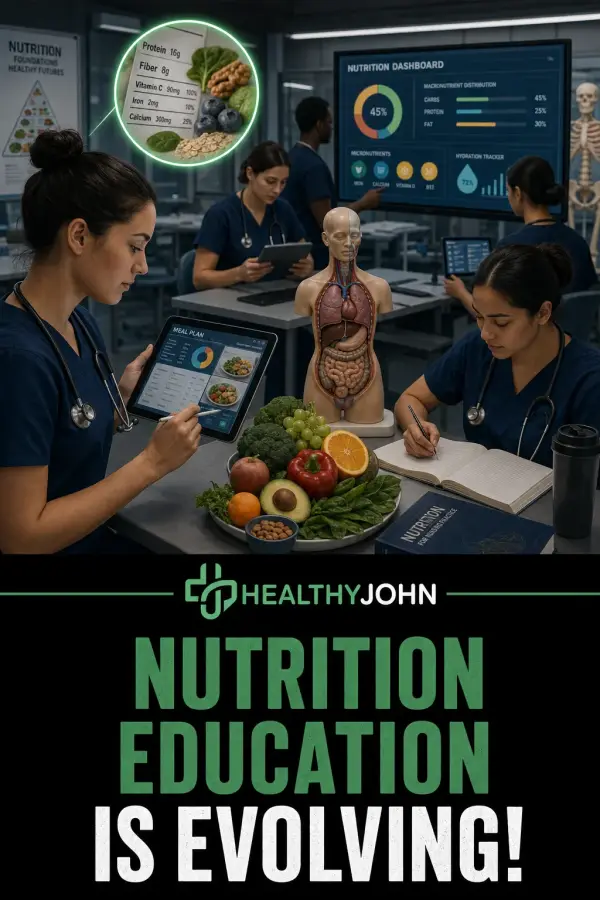
The Facebook post behind this story points to a study from Texas A&M and the idea that nursing education is giving more attention to nutrition. That sounds promising, but it’s smart to keep the claim modest. A single study does not mean a nationwide breakthrough. It does suggest a direction many readers would welcome: training health professionals to see food as part of patient care, not a side topic.
That matters because nurses often meet patients at the exact moment when food questions become practical. A new parent may ask what to eat while recovering. A person with diabetes may be confused about snacks and blood sugar swings. An older adult may be dealing with poor appetite, trouble chewing, or low energy. A nurse who understands nutrition can help spot the problem, ask better questions, and point a patient toward the right kind of support.
Still, it’s worth being careful here. Nurses are not expected to replace dietitians. Nutrition advice can get complicated fast, especially with chronic disease, food allergies, kidney disease, eating disorders, pregnancy, or weight concerns. Good nutrition education for nurses should prepare them to notice issues, give basic guidance, and refer when needed.
Why practical nutrition education beats theory alone
People often think nutrition education fails because the facts are wrong. Usually, the problem is that the facts are disconnected from daily life.
For example, telling someone to “eat more vegetables” is true, but not very helpful if they need a 10-minute dinner. It helps more to show how to use frozen vegetables, bagged salad, canned beans, and simple spices. Saying “choose less sodium” is useful, but it becomes real when someone learns to compare packaged soups, season food with herbs, or notice that most sodium comes from packaged and prepared foods.
The CDC says more than 70% of sodium Americans consume comes from packaged and prepared foods, and 90% comes from salt. That means label reading and food selection can matter more than a person thinks. But even that advice needs a practical step. If someone has never compared two similar products, a label is just a wall of numbers.
This is why parents and readers often ask for hands-on lessons, tastings, and cooking demos instead of worksheets. That instinct is backed by how people learn. Practice is sticky. Abstract advice fades.
What good nutrition education should include
If a program is trying to help real people, not just cover a syllabus, it should probably include a few things:
- Simple food skills, like how to read a label, build a plate, and shop on a budget.
- Real meal examples, not perfect plates that only work in a photo.
- Behavior support, such as goal setting, reminders, and problem solving.
- Food access awareness, because advice without considering cost and time often lands badly.
- Age-specific guidance, since teens, athletes, older adults, and patients with chronic illness need different help.
That last point matters. A teen worried about sports performance has different questions from a retiree trying to manage blood pressure. A parent packing lunch has different needs from a hospital patient learning what to eat after discharge. Nutrition education gets better when it respects those differences.
Where healthy eating advice overlaps, and where it differs
Most reputable guidance points in the same broad direction. CDC and Harvard Health both emphasize vegetables, fruits, whole grains, healthy fats, and less processed food. That overlap is useful, because it gives readers a stable starting point.
But there are some differences worth noticing. Harvard’s Healthy Eating Plate is more specific than USDA MyPlate in a few ways, especially around the quality of fats and the role of whole grains. That doesn’t mean one is “right” and the other is “wrong.” It means readers may get slightly different practical advice depending on which tool they use.
That’s normal in nutrition. A lot of guidance is based on broad agreement, not perfect certainty. A sensible reader should look for patterns rather than get stuck on one perfect rule.
A simple way to use the advice without overthinking it
If you want one practical filter, try this: Does the food give you something useful, and does it fit your life?
- Will this meal give me fiber or protein?
- Can I make this again next week?
- Is there a lower-sodium version I’d actually eat?
- Can I swap one processed item for something simpler without making dinner impossible?
That’s a better test than chasing the newest food trend.
What this means for families, schools, and clinics
For families, the best nutrition education may look less like “teaching kids facts” and more like building kitchen habits. Let children rinse vegetables, stir a sauce, compare cereal labels, or choose between two fruit options. These little tasks create familiarity.
For schools, the evidence points toward more than classroom talk. Meals, gardens, cooking activities, and repeated exposure seem more promising than one-off lectures. The CDC’s instruction gap suggests there is room to do more, but the bigger issue is making lessons active enough to matter.
For clinics and hospitals, the lesson is clear too. If a nurse or other clinician talks about food, the conversation should be short, concrete, and linked to the patient’s actual situation. “Try to eat better” is too vague. “Let’s look at two breakfast ideas that are easy on mornings when you’re rushed” is better.
The honest bottom line
Nutrition education is not a magic fix, and the evidence does not support treating it that way. But the newer studies do suggest something encouraging: when food education is practical, hands-on, and tied to real behavior, it has a better chance of changing what people actually eat.
That is a more realistic kind of progress than a flashy breakthrough. It’s slower, but it may matter more.
If you’re a parent, teacher, student, or healthcare worker, the next useful step is to look at one nutrition message you hear often and ask, “What would this look like in a real meal, on a real budget, on a real weekday?” If the answer is unclear, the advice probably needs to be more practical before it can be useful.


Comments
Be the first to share your thoughts on this article.