

- A redirect or temporary text page is not enough to judge a blood sugar supplement.
- Look for exact ingredients, doses, warnings, and company details before buying.
- Popular ingredients like cinnamon, chromium, and berberine have mixed or limited evidence.
- A supplement should never be treated as a replacement for diabetes care.
- If you have symptoms or out-of-range glucose numbers, medical advice matters more than a supplement.
Why an incomplete supplement page should make you pause
If a supplement page only shows temporary text or a redirect message, that is not enough to tell you what the product does. You should not guess based on the name alone. For blood sugar products, that matters even more, because the wrong choice can waste money or distract you from treatment that actually helps.
The first thing to look for is simple: a real label and a real product page. You want the ingredient list, serving size, directions, warnings, and the company name. If those basics are missing, you do not have enough information to judge the product.
That is especially important if you have diabetes, prediabetes, frequent urination, unusual thirst, shakiness, or other symptoms linked to blood glucose changes. A supplement can only be considered after you know what it contains and whether there is any evidence that it does what it claims.
What a trustworthy blood sugar supplement should clearly show
Before buying any supplement, check for these details:
- Exact ingredients listed by name, not just a proprietary blend.
- Amounts per serving for each ingredient.
- Directions for use that are easy to understand.
- Warnings and contraindications, especially if you use insulin or diabetes medicines.
- Company contact information and a physical address.
- Third-party testing, if the brand claims it.
- Lot number or expiration date on the package.
If a page only gives broad promises such as “supports healthy glucose levels” without any label details, that is not enough. A claim without context is just marketing.
Claims that should make you skeptical
Some supplement claims are too vague to be useful, and some are a warning sign. Be careful if a product says it:
- works fast without explaining how
- replaces diabetes medicine
- lets you eat anything you want
- works for everyone
- has no side effects at all
- is based on a secret formula
Those claims do not help you understand the product. They usually mean the page is built to sell, not to inform.
The National Center for Complementary and Integrative Health says evidence for diabetes-related supplements is weak for many ingredients, and the research is often small or inconsistent. That means a supplement may sound promising without having strong proof behind it.
Ingredients that are often marketed for blood sugar support
Some ingredients show up again and again in blood sugar supplements. That does not mean they are proven. It only means they are popular.
- Cinnamon: Studies are mixed. Some show small benefits, others do not. Mayo Clinic notes that cinnamon alone cannot treat diabetes.
- Chromium: Often marketed for glucose support, and some recent reviews suggest it may help some people with type 2 diabetes, but the evidence is still suggestive rather than definitive, and dosing and long-term safety remain uncertain.
- Berberine: Has been studied, and newer meta-analyses suggest it may lower glucose, but results vary and product quality matters a lot.
- Fenugreek: Sometimes studied for blood sugar, but the evidence is still limited, heterogeneous, and formulation differences matter.
- Gymnema sylvestre: Some early research has been encouraging, but the evidence base is still preliminary and that is not the same as proof for a specific commercial product.
Even when an ingredient has some data, the real question is whether the dose, form, and product quality match the research. That is where many supplement pages fall short.
Why the dose matters as much as the ingredient
Two products can list the same ingredient and still be completely different. One may contain a studied amount. Another may include a tiny dose that is unlikely to matter. Some labels use blends, which makes it hard to tell what you are actually getting.
Look for the exact amount of each ingredient in milligrams or micrograms. If the label hides that detail, you cannot compare it with research. You also cannot tell whether the amount is sensible or just there for show.
It is also worth checking whether the ingredient form matches the studies. For example, one trial may use a specific extract, while a supplement uses a different form entirely. Those are not the same thing.
Questions to ask before you buy
These questions can help you slow down and make a better decision:
- What problem am I trying to address, exactly?
- Do I have a diagnosis that needs medical care rather than a supplement?
- Can I see the full label?
- Are the ingredient amounts listed clearly?
- Is there a warning about interactions with diabetes medicines?
- Does the company explain where the evidence comes from?
- Would my clinician want to know I am taking this?
If the answer to several of these is no, wait. Waiting is often safer than guessing.
Signs you should not rely on a supplement alone
Some situations call for medical advice first, not a supplement purchase. Talk with a clinician if you have:
- new or worsening frequent urination
- excessive thirst
- unexplained weight loss
- blurred vision
- shakiness, sweating, or confusion
- fasting glucose numbers that are often out of range
- a history of low blood sugar
- kidney disease, liver disease, or pregnancy
The CDC notes that for people managing diabetes, typical targets are often before a meal 80 to 130 mg/dL and 2 hours after the start of a meal less than 180 mg/dL. It also defines low blood sugar as below 70 mg/dL. If your numbers are well outside those ranges, experts would generally consider medical evaluation and treatment to be more important than leaning on a supplement first.
If you have symptoms of low blood sugar, you should know what actually helps right away. Standard treatment, such as glucose tablets or another fast source of glucose, is different from a supplement marketed for long-term support.
How to compare a supplement with real evidence
A good habit is to separate three questions:
- Has the ingredient been studied?
- Was it studied in people like me?
- Is this exact product the same as what was studied?
Most supplement pages only answer the first question, and sometimes not even that. A few small studies do not prove much on their own. The NCCIH points out that research often uses different doses, different formulations, and different groups of people, which makes results hard to compare.
That is why a polished product page is not enough. You need details, not slogans.
One optional next step if you still want to look at the product
If you have checked the label, looked for warnings, and still want to review the product page, you can use this link as a starting point: Healthy John may earn a commission if the reader purchases through it. Gluco 6
Even then, treat the page as only one piece of information. If the page still lacks a full ingredient list, directions, and safety details, it is reasonable to pass and keep looking.
What to do instead of buying on guesswork
If your goal is better blood glucose control, there are safer first steps than buying an unclear supplement:
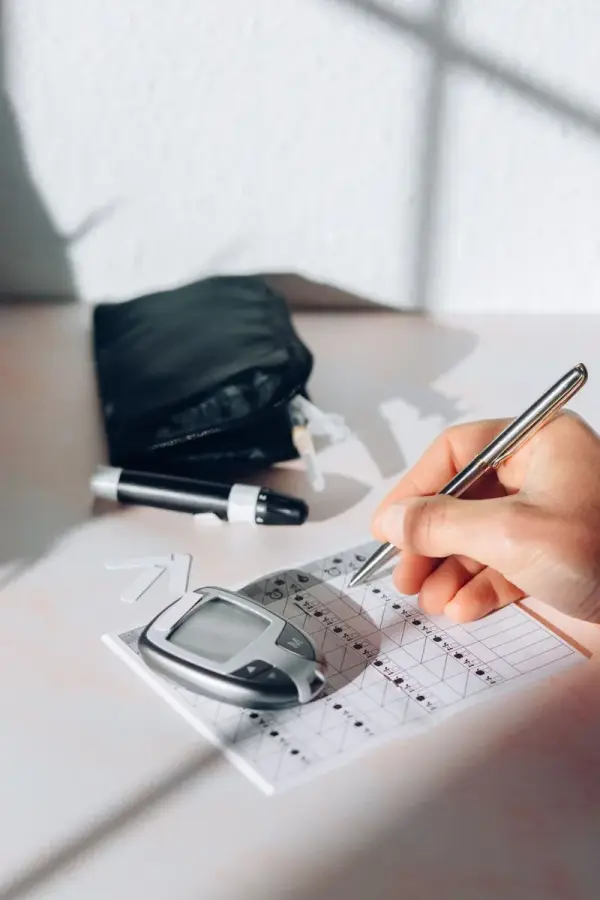
- track your blood glucose if your clinician has told you to do so
- review meals that cause sharp rises or drops
- check whether medications are being taken as prescribed
- look at sleep, activity, and alcohol use
- ask about nutrition counseling if you have diabetes or prediabetes
These steps may take more effort than clicking buy, but they give you information you can actually use. They also help you and your clinician spot patterns that a supplement cannot explain.
Bottom line
If a supplement page is incomplete, do not fill in the blanks yourself. For blood sugar support, the label, dose, warnings, and evidence matter more than the product name. A real product should make it easy to tell what is inside, who it is for, and what risks it may carry. If those answers are missing, wait until they are clear.
The practical move here is not to get pulled in by a vague supplement page. If a blood sugar product does not show a full label, exact doses, and safety warnings, it is not ready for a careful buyer. I would tell readers to verify the basics first, then compare the ingredient evidence with their own health situation and medications. If that information is still missing, the safest choice is to skip it and ask a clinician or pharmacist instead.


Comments
Be the first to share your thoughts on this article.